
 Last Update:
March 14, 2026
Last Update:
March 14, 2026
Away fans who visit Estadio Presidente Peron occupy the section labelled ‘Popular Alta Norte Visitante’ in the north end.
There are up to 3,500 seats in this section, which is a modest number given that Estadio Presidente Peron has a capacity of 55,000. However, this number may vary depending on the fixtures. For example, more seats can be allocated to visiting supporters during continental competitions such as the Copa Libertadores.
El Cilindro modernisation continues as Racing improve fan experience
Estadio Presidente Peron (El Cilindro) continues to undergo a gradual modernisation aimed at improving the matchday experience while preserving its iconic circular design.
After installing a new high-tech LED lighting system during the 2024–2025 period to meet international broadcasting standards, recent work has focused more on upgrading the stadium’s internal infrastructure.
The club has also leaned into its idea of turning the stadium into a wider fan hub, recently hosting large fan zone screenings for away matches.
As part of these modern changes, the club has used cinema-quality screens to bring more than 40,000 supporters together even when the team is playing elsewhere.
While long-term expansion remains something the board continues to discuss, the current focus is on maintaining the structure of the historic bowl and improving its digital connectivity.
Football chants are an integral part of fan culture. Fans of Racing Club are not left behind in giving their best support at home and on away days.
Below are some of the most popular racing club chants:
- La Acade, La Acade
- Yo te quiero Racing
- Racing, Racing de mi vida
- Soy de Racing
- Vamos Academia
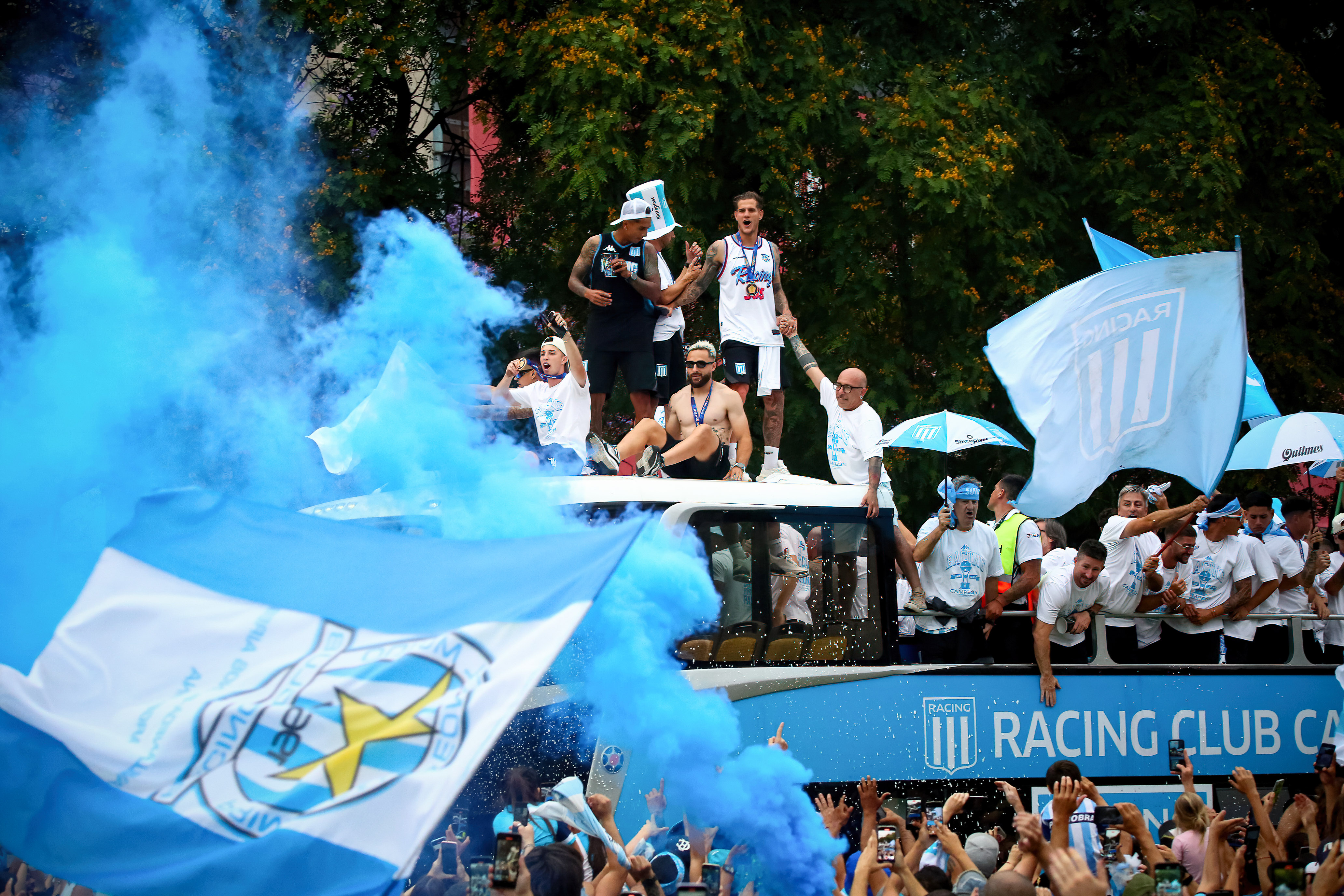
Tifos or visual displays in the form of banners, scarves, flyers, cards and flags are hardly missed on any of Racing Club’s matches. In most cases, it is La Guardia Imperial, the football club’s most popular ultras, that have the best tifos on matchdays.
Below are some tifos that have been spotted at Estadio Presidente Peron on matchdays:
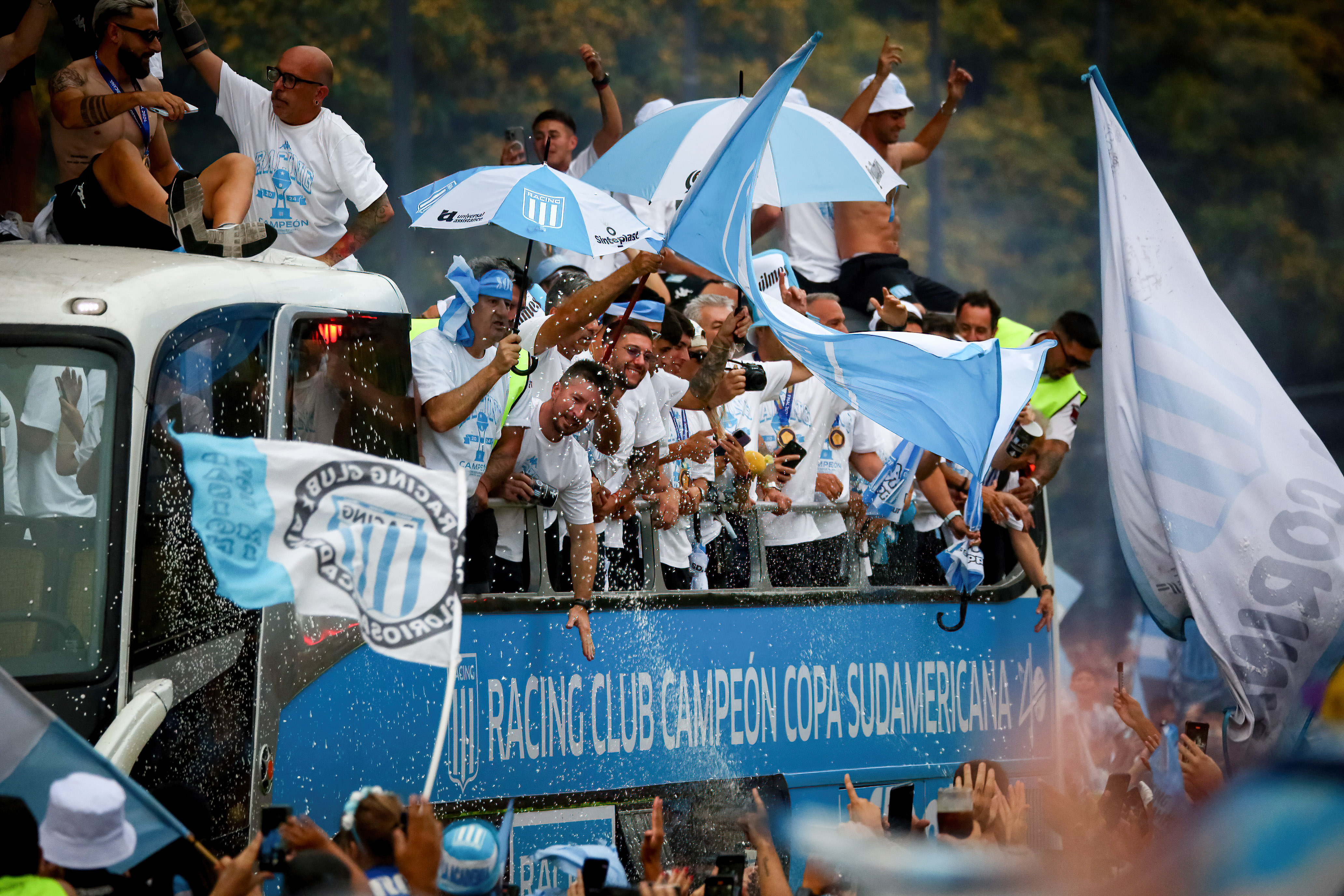
Copa Sudamericana tifos
Estadio Presidente Perón, situated in the Avellaneda district of Greater Buenos Aires, stands merely 200 metres from its arch-rival, Independiente’s Estadio Libertadores de América – Ricardo Enrique Bochini.
The stadium’s distinctive double-tiered stands create an almost perfect circular structure, with cutouts in the centre to accommodate the pitch. The enduring uniqueness of this design, which earned it the nickname El Cilindro, sets it apart to this day.
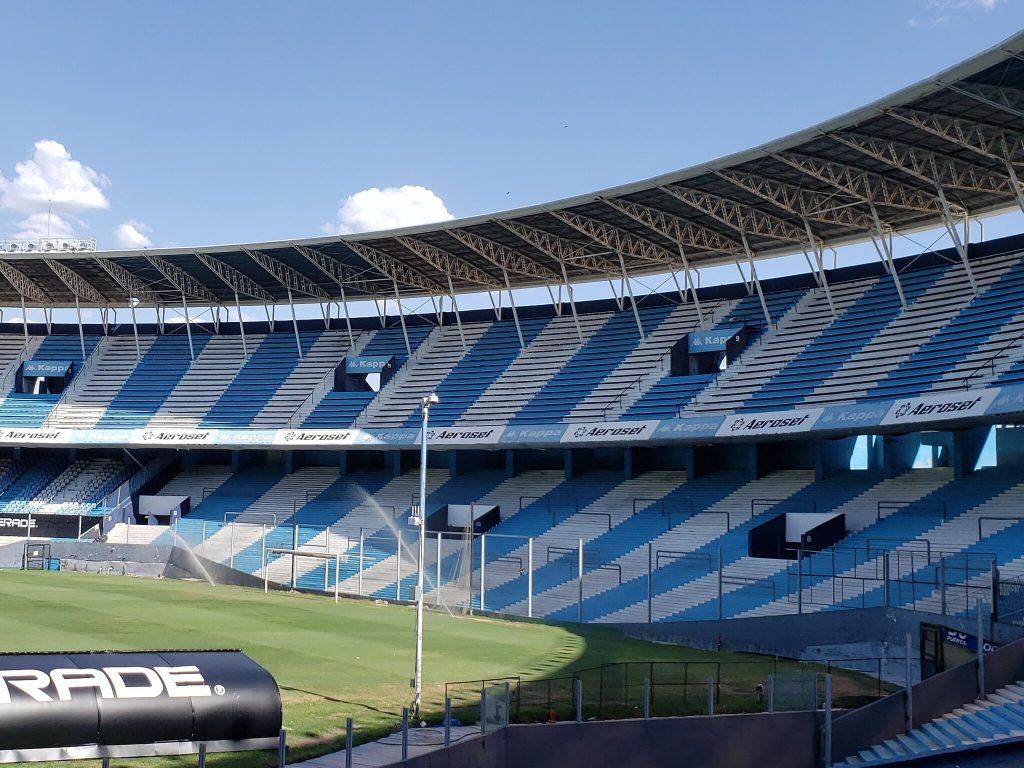
The Estadio Presidente Perón holds around 50,000 people, although the exact modern capacity remains unconfirmed. The record attendance is reported as an incredible 120,000 back when Racing played Celtic in the 1967 Intercontinental Cup.
Tickets are conveniently accessible through various channels, including the stadium itself, the club office located at Nogoya 3045 in the western part of Buenos Aires, or the club store at Lavalle 1650 in the Microcentro.
On match days, tickets are typically available for purchase at the stadium’s ticket windows. For additional details, feel free to reach out by calling +54 4502 7396 or emailing the club’s official website.
If opting to purchase tickets online in advance, it’s essential to bring the confirmation email to a designated ticket window on Diego Milito Street.
At the window, exchange the confirmation for a card that serves as your entry pass. It’s advisable to keep a copy of the confirmation email on hand, as the card itself does not indicate the specific turnstiles for entry.
The initiative to construct the Estadio Presidente Perón (nicknamed El Cilindro, due to its cylinder shape) began in 1944 as part of an effort to enhance the club’s facilities. A dedicated committee was formed to acquire 30,000 m² of land owned by British railway companies at the time.
On 16 August 1946, Argentina’s President Juan Domingo Perón issued Executive Order No. 7395, granting Racing Club a 3 million peso loan for the construction of a significant stadium for sports activities.
Thanks to the efforts of devoted Racing Club supporter Ramón A. Cereijo, an additional loan of 8 million pesos was secured, payable within a maximum period of 65 years. In gratitude to government collaboration, the club’s board appointed Juan Domingo Perón as honorary president and various government officials as honorary members.
The old stadium hosted its final game on 1 December 1947 between Racing and Rosario Central. Soon after, it was demolished to make way for the construction of the Estadio Presidente Perón, affectionately known as El Cilindro de Avellaneda. Despite President Perón’s suggestion to build the stadium in Retiro, Buenos Aires, the decision was made to stay in Avellaneda to keep their place of belonging.
Estadio Presidente Perón was officially inaugurated on 3 September 1950, with a match between Racing and Vélez Sarsfield, ending in a 1-0 victory for Racing.
In 1951, the stadium hosted the opening and closing ceremonies of the First Pan American Games, “Buenos Aires 1951,” as well as the football matches of the competition.
Significant moments include the 1967 Copa Libertadores final against Club Nacional de Football and the 1967 Intercontinental Cup final against European champion Celtic.
Domestically, the stadium witnessed the 1969 Argentine Primera División final between Chacarita Juniors and River Plate, as well as the 1976 final where Boca Juniors secured a 1–0 victory over River Plate with Rubén Suñé’s “ghost goal.”
The Cilindro underwent changes in address when Avellaneda’s local government approved renaming Cuyo street to Oreste Osmar Corbatta, a revered Racing idol who passed away in December 1991.
Noteworthy additions include new lighting towers inaugurated in 1966 and a modern illumination system supported by a light blue, translucent roof, making the Cilindro the first covered stadium in Argentina.
Over the years, the stadium has also played host to national and international concerts since the late 1990s.
The clash between Racing Club and Independiente, famously known as El Clásico de Avellaneda, stands as one of Argentina’s most intense rivalries, tracing its roots back to the early 20th century.
Both stadiums find their home in Avellaneda, a Buenos Aires suburb just south of the Capital Federal city limits, and are separated by a mere 200 metres!
A particularly heated encounter occurred on 26 November 1961, marking the most violent game in their history. The referee had to suspend the match for six minutes due to player brawls, resulting in the dismissal of four players from each team. The game ultimately concluded with a 1–1 draw.
13 August 2006, witnessed another intense episode as El Clásico de Avellaneda had to be abandoned. The escalating violence among fans reached a breaking point during Independiente’s 2–0 lead at Libertadores de América. Riots erupted in the away stands, leading Racing fans to confront the police, prompting the referee to abandon the match. Eventually, Independiente was awarded the three points from the game.
Reviews
Be the first to leave a review of Racing Club (Estadio Presidente Perón)!
Why not write your own review of this ground and have it included in the Guide? Find out more about submitting a Fans Football Ground Review.