

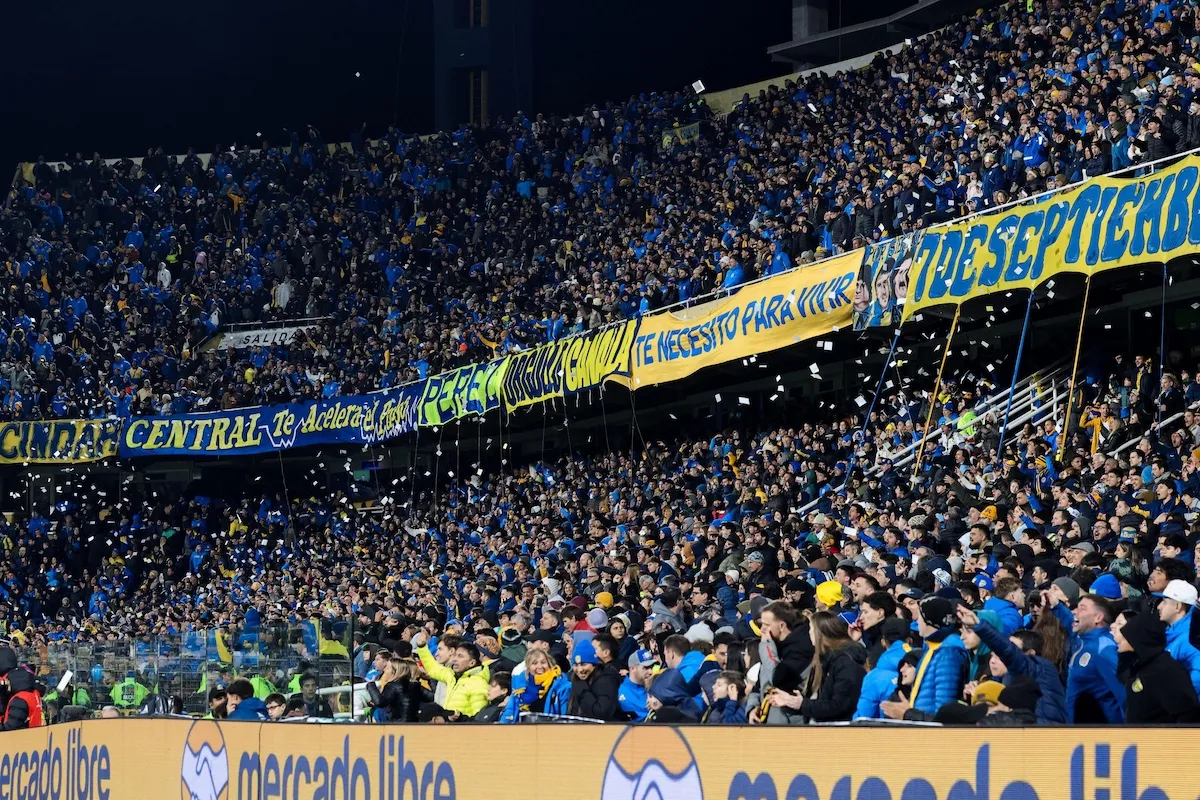
Argentinian Liga champions Rosario Central took a major step towards the redevelopment of their Gigante de Arroyito home on November 7, when they opened the third tier of its east stand, raising the ground's capacity by roughly 3,500 seats to take it beyond the 50,000 mark.
Los Guerreros ran out 2-0 winners against Estudiantes that day, courtesy of goals from Julian Fernandez and Emanuel Coronel either side of half time, but fans had more to celebrate with the future of their club bolstered by the stadium upgrade.
The inaugural match for the expansion is just the latest milestone in the broader modernisation of the Gigante de Arroyito, an extensive project that has been underway for months.
What next for Gigante de Arroyito and Rosario Central?
The first signs of construction on the third tier of the east stand were spotted back in May, and everyone at the club will be delighted to finally have their work bear fruit.
However, despite reaching an overall capacity of 50,000 seats at the stadium, the project is far from complete, with hospitality and accessibility set to receive upgrades over the coming months.
Rosario are currently in the process of constructing 50 VIP boxes at the Gigante de Arroyito, while new circulation routes and panoramic lifts are yet to be unveiled at the site.
Elsewhere, the stadium's car park is undergoing a revamp of its own, in order to allow it to accommodate 335 vehicles on matchdays, improving visitor access to the ground.
Further modernisation of the venue will see the lighting system overhauled, as the floodlights beaming down on the action are set to be replaced by new LEDs.
FGG Says: The future looks bright amidst modernisation of Gigante de Arroyito
Rosario are striking while the iron is hot, joining the trend of stadium expansions while sitting at the top of the Argentinian Primera Division.
The unveiling of the new seating was the biggest step in the project to date, and with the documentation of the revamp approved by two committees of Rosario City Council, the path to completion looks straightforward.
Bolstering revenues through a stadium overhaul during a time of financial insecurity could help to keep Rosario at the summit of Argentinian football in the long term, not to mention the enhanced fan experience brought about by the new technology and accessibility at the Gigante de Arroyito.