

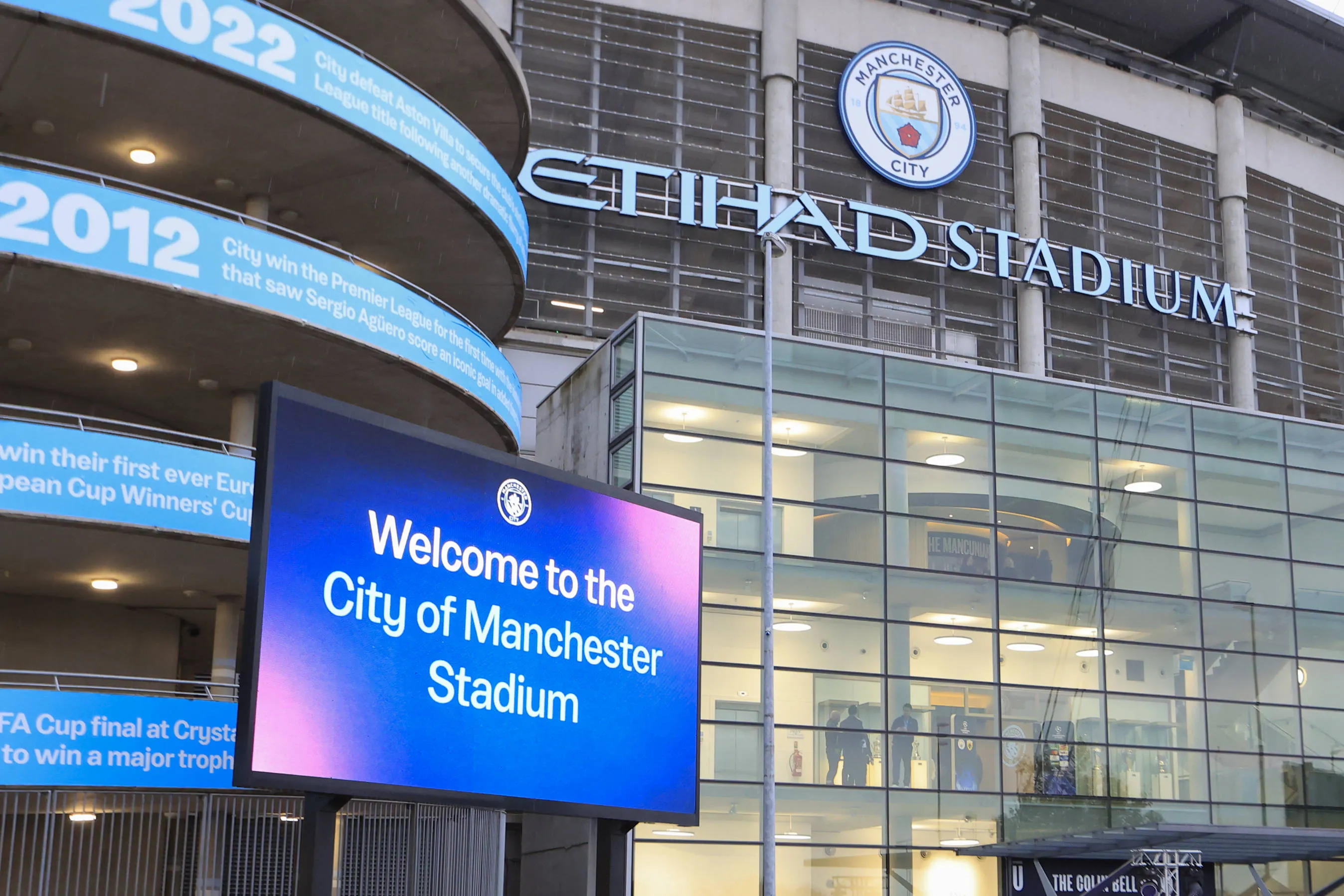
Manchester City's Etihad Stadium naming rights agreement has come under renewed scrutiny after a Freedom of Information disclosure revealed the council's share of the deal was capped at £750,000 per year.
The revelation has prompted fresh questions over the value Manchester City Council received from the arrangement, with the stadium lease now under review.
How Man City paid £750k for stadium rights before £100m Etihad deal
According to The i Paper, the Cityzens agreed to pay Manchester City Council 50% of naming rights revenue, subject to an annual cap of £750,000, when the stadium lease was renegotiated in October 2010.
The agreement came months before Etihad Airways signed a major sponsorship package in 2011 covering the stadium, club shirts and surrounding campus.
The ten-year deal was reported at the time to be worth around £400m, with the stadium naming rights portion estimated at between £10m and £15m annually. Neither party publicly confirmed the precise figures.
The stadium was originally built using public and lottery funding for the 2002 Commonwealth Games, costing £112m. Although Manchester City Council retains ownership, the club operates the venue under a 250-year lease.
The disclosure has raised concerns about whether the council secured sufficient value for a public asset. The issue comes amid wider scrutiny of City's commercial agreements.
An independent commission found that sponsorship arrangements involving Etihad and other partners included payments from the club's Abu Dhabi owners that artificially inflated revenue. City recorded £86.75m in sponsorship fees in 2011-12, of which £16m was described as base fees paid by sponsors, with the remaining £70.75m topped up by Abu Dhabi United Group.
Manchester City Council has confirmed that the stadium lease is under review, with the club's £300m expansion nearing completion.

FGG says: Etihad deal raises important questions over public value
The £750k cap highlights why transparency matters when public assets are used in commercial agreements with private football clubs.
The council's share should be assessed against the full terms of the lease, the risks it carried and the benefits the wider development brought to Manchester.
With the stadium lease under review, the authorities have an opportunity to explain how the arrangement was structured and whether it remains appropriate following the expansion.