

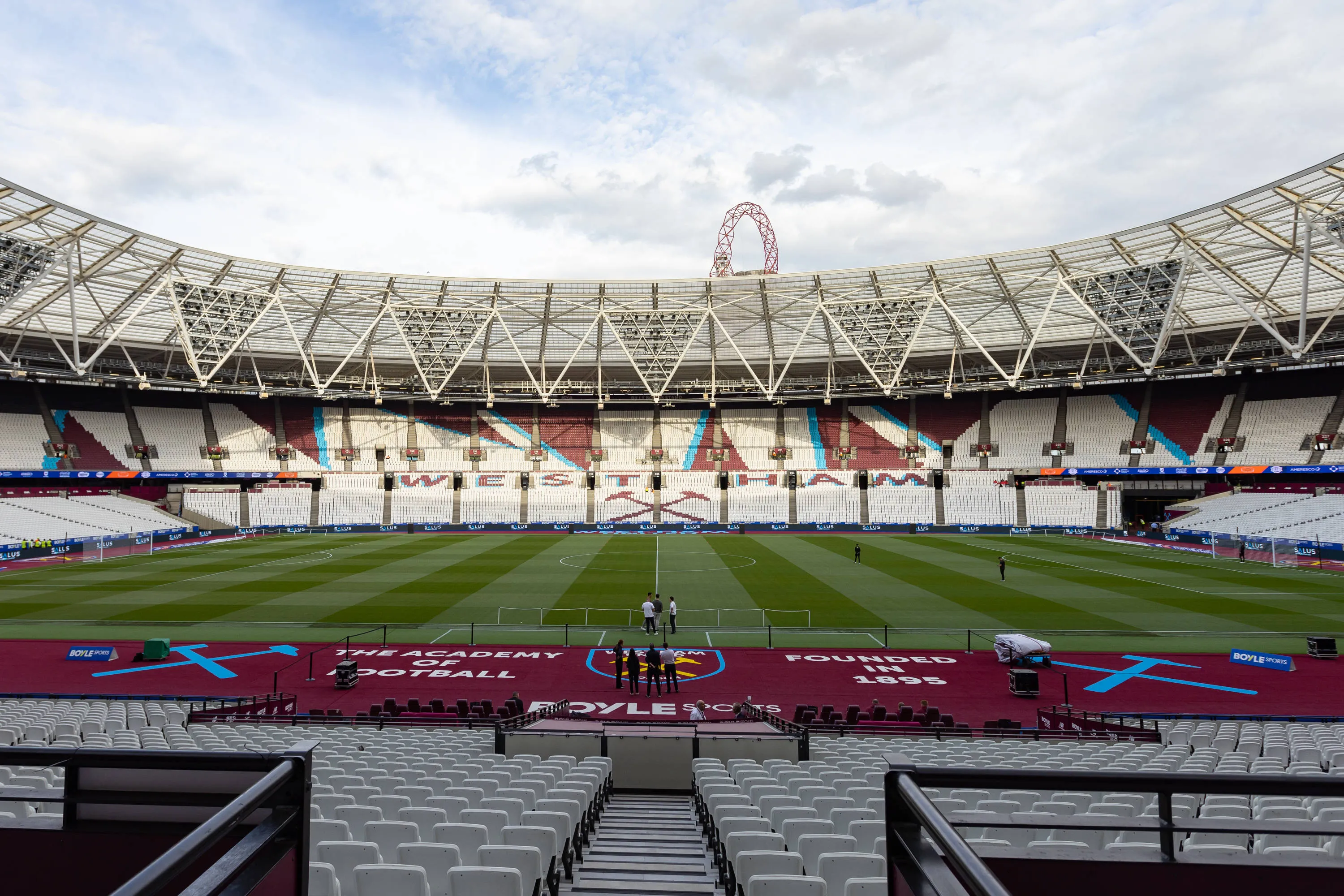
London Stadium chiefs are exploring plans to attract major boxing events as they look to increase revenue and offset the financial impact of West Ham United’s relegation.
The proposed change could allow the venue to compete with Wembley Stadium for blockbuster fights while easing the burden on taxpayers.
London Stadium chiefs want to rival Wembley in bid to boost coffers
The London Stadium currently faces an estimated £19m annual cost to taxpayers, with the Hammers' relegation to the Championship contributing to the financial pressure after the club’s rent was halved.
Stewarding costs have also increased because of the additional home fixtures in the second tier.
The stadium was built at a public cost of £701m before West Ham moved in under a 99-year lease agreed in 2016. The original deal involved a £15m payment and annual rent of £2.5m.
Although the venue hosted major events last summer, including concerts by Take That and Metallica, alongside Soccer Aid, the revenue generated was reportedly absorbed by the financial fallout from West Ham’s relegation.
Under the current arrangements, sporting events are restricted to a capacity of 60,000, compared with the 85,000 permitted for entertainment events.
However, LS185, the operator owned by the Greater London Authority, wants boxing to be classified as a special event, potentially allowing promoters to fill the stadium to its full entertainment capacity, according to City AM.
The financial incentive is significant. For example, Anthony Joshua’s anticipated December fight against Tyson Fury at Cardiff’s Principality Stadium is expected to generate more than £20m, while Fury’s 2022 bout with Dillian Whyte at Wembley reportedly generated over £11m.
A larger capacity could therefore make the London Stadium a more attractive destination for promoters seeking to stage major boxing events.

FGG says: West Ham's home must find a sustainable way to generate revenue
The proposal makes commercial sense, with blockbuster boxing offering a potential source of income beyond football and concerts.
Greater capacity could help London Stadium compete for events that might otherwise go to Wembley or Cardiff.
However, the bigger challenge is reducing the venue’s long-term reliance on public money.
West Ham’s push for promotion offers hope, but the stadium needs a broader events strategy that can withstand fluctuations in the club’s fortunes.