

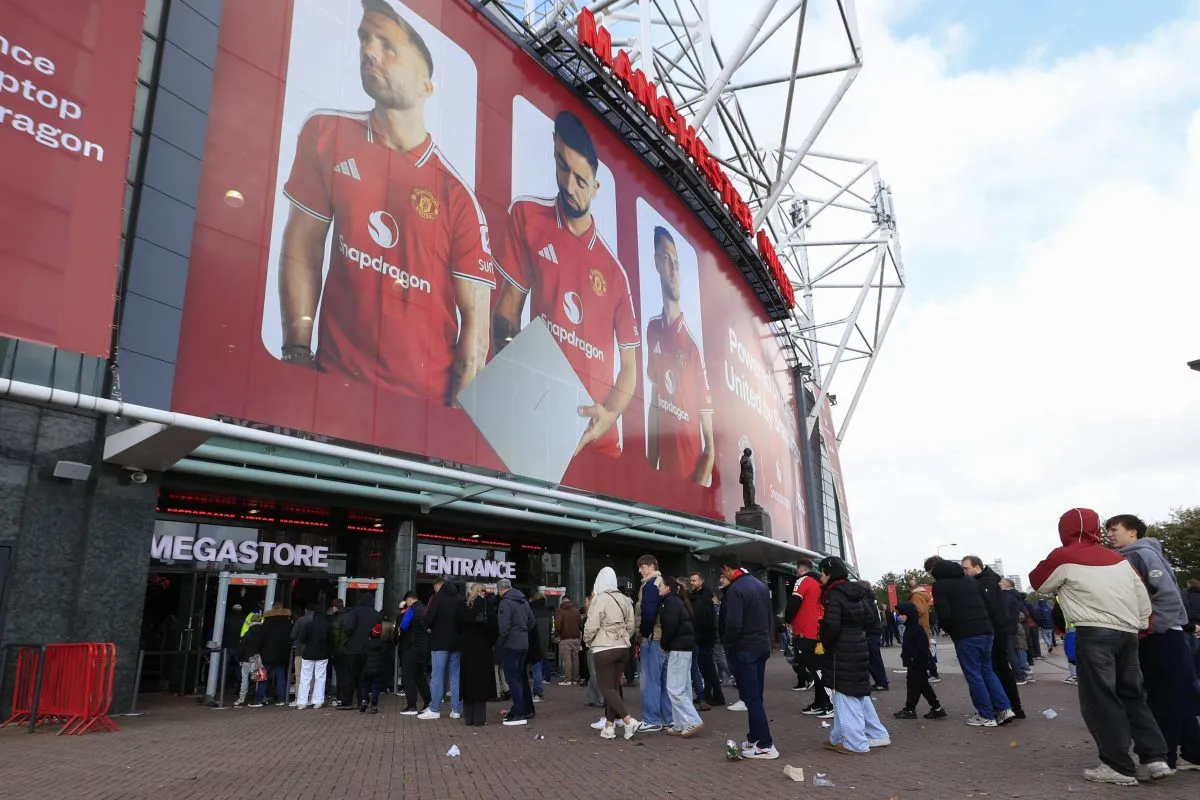
Manchester United are in a precarious position, with the 20-time English champions sitting in the Premier League relegation zone less than three months into the new campaign.
The Red Devils are 18th in the table following an eight-goal thriller against Aston Villa on Sunday, November 8, 2026, with the 4-4 draw at Old Trafford leaving them in the bottom three this late into a season for the first time in the Premier League era.
United are now guaranteed to spend the November international break in the drop zone, marking their longest spell in the bottom three since the final months of Ron Atkinson’s reign in 1986.
Those struggles come as the club presses ahead with ambitious plans for a new 100,000-seater stadium, which they hope to build around 350 metres north-west of Old Trafford, with Sir Jim Ratcliffe describing the proposed venue as the “world’s greatest” football stadium.
However, the plans remain at the design stage, with construction yet to begin, no financing committed and planning applications not expected until late 2027 or early 2028.
Against that backdrop, FootballGroundGuide looks at what could happen to the club’s proposed new stadium if they drop out of the Premier League.
How could relegation affect Man Utd’s new stadium plans?
Football finance analyst Paul Quinn, who writes as The Esk, published a detailed stress test of United’s finances on November 1. It concluded that one season outside the Premier League would be survivable, but that two or more would not be survivable without fresh investment.
Taking that into account, FootballGroundGuide expects a single season in the Championship to delay the stadium project rather than bring it to an end.
What relegation would do to Manchester United's income
FY2026 actual results against an estimated first season in the Championship (2027-28)
Projected fall in revenue: £285.6m
Revenue by stream
Bar length = revenue in £m for each stream
Adjusted EBITDA against the lending covenant
Bar length = adjusted EBITDA in £m (scale from −£50m to £250m)
Dashed line: £125m minimum EBITDA required by lenders
Sources: Manchester United plc FY2026 accounts (year to 30 June 2026). Championship figures are scenario estimates published by The Esk on 1 November 2026.
If United were relegated in May 2027 but secured promotion at the first attempt, the plans would probably remain viable, although any prolonged delay could put the 2035 opening target at risk.
The club would likely continue paying for planning and design work without entering into binding financial agreements, with The Esk advising United to wait until their 2027/28 division is known before making major financing commitments. The potential to redeem existing debt from June 2029 could also influence the club’s wider financing strategy.
Spending two or more seasons outside the top flight would present a much bigger problem, however, with the stadium project in its current form potentially put on hold.
It is believed relegation would make the scheme commercially unfinanceable until United returned to the Premier League, as lenders would be reluctant to base their calculations for naming rights, premium seating and borrowing capacity on Championship revenue.
In that situation, a change of ownership or a scaled-back stadium plan could become more realistic options, potentially bringing the cheaper option of redeveloping Old Trafford back into consideration.
An outright collapse of the project still seems unlikely, given that United have already spent £63.5m acquiring land for the proposed stadium, and Ratcliffe has tied much of his legacy to the scheme.
The club would also retain significant earning power in the second tier. The Esk estimates United would still generate around £230m in commercial revenue, which, combined with parachute payments, would distort the Championship more than any relegated club in history.
How does the new Man Utd stadium situation compare with similar relegation crises in the past?
Leicester City provide perhaps the closest comparison, as plans to expand the King Power Stadium received initial planning approval in September 2022, before the club’s relegation in May 2023, although formal hybrid planning approval was not granted until December that year.
The project has yet to progress to construction and has been paused while Leicester play outside the Premier League. The Foxes were relegated to League One in April 2026, and its owners have since put the club up for sale, with the King Power Stadium and the Seagrave training ground included in the package.
The Foxes had encountered similar financial difficulties two decades earlier, when they moved into the Walkers Stadium in 2002 as a newly relegated club carrying more than £30m in debt.
The loss of Premier League television revenue, coupled with the collapse of ITV Digital, contributed to Leicester’s financial difficulties and eventual administration, although they secured promotion back to the top flight that same season.

Everton’s move to Bramley-Moore Dock offers another example, although their situation was more complicated because construction continued while the club battled relegation between 2021 and 2025.
The cost of the project rose from an initial estimate of around £300m to £500m, and eventually to around £760m. Everton faced serious financing pressures along the way, borrowing around £200m from 777 Partners during the American firm’s failed takeover attempt and taking a £158m loan from a group led by MSP Sports Capital, with funds used to keep paying the stadium’s contractors. The Friedkin takeover was followed by a £350m refinancing deal to restructure existing stadium-related debt.
Fulham, meanwhile, pressed ahead with the Riverside Stand redevelopment despite relegation in 2019, with owner Shahid Khan providing substantial financial backing as construction began that summer. The club later secured a £125m loan from JP Morgan to help complete the development.
Sunderland also opened the Stadium of Light in 1997 after being relegated, before returning to the Premier League in 1999.
United’s circumstances are arguably closest to Leicester’s in 2023, as their proposed stadium remains at the planning stage, giving the club more scope to put the project on hold or reconsider its scale.
Unlike Fulham, however, United do not have an owner who has publicly committed to personally funding the entire stadium scheme. INEOS, which holds a 28.94% stake in the club, faces debt pressures of its own, with its main chemicals arm, INEOS Group Holdings, reporting net debt of around €12.5bn at the end of September 2026.
What could save the new Man Utd stadium if the club gets relegated?
An immediate return to the Premier League would be the biggest factor in keeping the stadium plans on track. United’s lenders require the club to earn at least £125m in adjusted EBITDA (a measure of operating profit) per year.
The club is allowed a one-season exemption from that requirement, but not in consecutive years. That means a second straight season in the Championship would likely lead to a breach of the agreement.
The Esk estimates that a one-season stay would leave the club needing between £50m and £100m in bridging capital, a relatively manageable sum compared with the financial demands of a longer stay in the Championship.
If United remained outside the top flight for longer, additional equity or refinancing would become necessary, with The Esk putting the potential requirement at between £150m and £400m.
That could prove difficult to arrange, particularly with the Glazers retaining around 67.9% of the voting rights while INEOS holds operational control.
The June 2029 debt-redemption opportunity could also prove crucial, as from June 10, 2029, United will be able to pay off their $550m senior secured notes early without paying an extra penalty to the lenders. The notes are not due to mature until June 2031.

Jamie Bajwa, a former Goldman Sachs equity analyst and founder of sports finance advisory SPG, estimates that United’s remaining borrowing capacity is currently around £295m. If the existing debt were removed, he believes it could rise to as much as £1.6bn, although that figure assumes the club could borrow up to five times its EBITDA.
A change of ownership could provide another route to the funding required, particularly as Ratcliffe’s guaranteed minimum price of $33 per share in a Glazer-led sale expires in February 2027. The Esk regards a distressed sale following relegation as the most likely route to fresh investment.
In the meantime, The Esk’s advice is for United to keep the project at the design and planning stage, avoid signing binding financing agreements and include relegation-related pay-cut clauses in new player contracts.
Winning supporters over would also be important, particularly after Man Utd fans made their feelings about the new stadium clear through chants inside Old Trafford.