

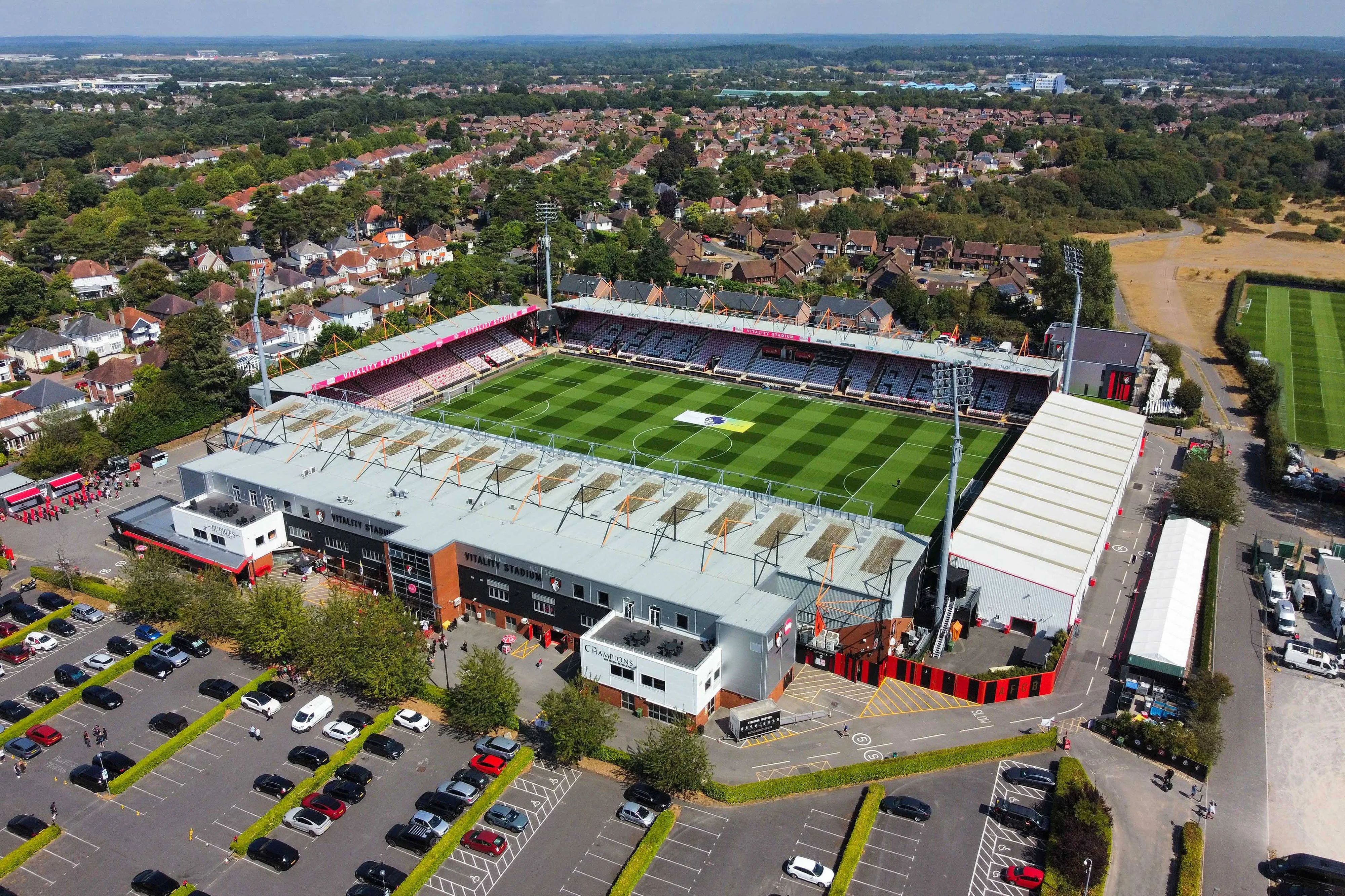
The Vitality Stadium has been AFC Bournemouth's home since 1910, making it one of English football's longest-serving grounds despite its relatively modest size.
With the smallest capacity in the Premier League, the stadium is undergoing an £85 million redevelopment designed to transform the matchday experience and increase capacity to more than 20,000.
Here, FootballGroundGuide looks at the Vitality Stadium through the numbers that tell its story.
Vitality Stadium by the numbers
| Stat | Number |
|---|---|
| Opened | 1910 |
| Bournemouth's home since | 1910 |
| Current capacity | 12,357 |
| Future capacity | 20,196 |
| Original stadium name | Dean Court |
| All-time record attendance | 28,799 |
| Record attendance match | Bournemouth vs Manchester United |
| Record attendance date | 2nd March 1957 |
| Pitch dimensions | 105m x 68m |
| Redevelopment cost | £85m |
Bournemouth's record attendance was set on 2nd March 1957, when 28,799 spectators watched the Cherries face Manchester United in the FA Cup.
The historic figure is more than double the stadium's current capacity, highlighting the limitations of the modern ground.
Vitality Stadium's history and redevelopment numbers
Originally known as Dean Court, the stadium hosted its first Football League match on 1st September 1923, when Bournemouth drew 0-0 with Swindon Town in front of 7,000 spectators.
The ground was completely rebuilt in 2001, with the pitch rotated by 90 degrees as part of the reconstruction. It has since operated under several sponsored names, including Fitness First Stadium, Seward Stadium, Goldsands Stadium and its current Vitality Stadium identity.
The ongoing £85m redevelopment is the biggest transformation in the ground's recent history. Work began in 2026, with the project incorporating a new 7,000-seat South Stand, four filled-in corners, extensions to the North and East Stands, and additional hospitality facilities.
The completed scheme is expected to increase capacity from around 11,300 before redevelopment to 20,196, an increase of approximately 79%.
The work is expected to be delivered in stages through 2027-28.
Vitality Stadium ticket prices by the numbers
Bournemouth's limited capacity means tickets are in high demand, with recent adult matchday prices generally ranging from £35-£40 for cheaper fixtures to around £55-£65 for the most expensive standard seats.
Adult season tickets have typically ranged from approximately £550 to more than £900, depending on seating location and package.
The redevelopment will introduce improved hospitality facilities, a new fan plaza, upgraded media facilities, a new ticket office and additional turnstiles.
With a planned capacity of 20,196, Bournemouth are preparing to move beyond the constraints of one of the Premier League's smallest grounds while retaining the identity of a stadium that has served the club since 1910.